Slip-Resistant Work Shoes: What SR-Rated Means (ASTM F3445)
Snibbs FootwearSlip resistance is one of the most important claims in work footwear, and one of the easiest areas for shoppers to misunderstand. Terms like non-slip, slip-resistant, and SR-rated can sound interchangeable when they are not. Understanding what those terms actually mean — and where they come from — helps you make a more informed buying decision.
That matters because traction is not a trivial feature. In hospitals, kitchens, and other demanding work environments, one loss of footing can mean injury, reduced confidence, or lost time. The best work shoes explain not just that slip resistance matters, but how it is actually measured and evaluated.
What does SR-rated mean?
What does COF mean?
What is ASTM F2913?
ASTM F2913 is the test method. ASTM describes it as the standard test method for measuring the coefficient of friction for evaluating slip performance of footwear and test surfaces/flooring using a whole-shoe tester. The method determines the dynamic coefficient of friction between footwear and flooring under reproducible laboratory conditions for evaluating relative slip performance.
In plain terms, F2913 is the lab method behind many serious traction claims. It gives the industry a repeatable way to describe how shoes grip floors under tested conditions — which helps buyers compare claims more intelligently, rather than relying on vague language like "extra grippy" or "built for traction."
What is ASTM F3445?
ASTM F3445 is the specification. It covers minimum slip-resistance requirements for the performance of footwear and is intended to help reduce potential injuries. It also specifically warns that controlled laboratory tests used to determine compliance should not be treated as establishing performance levels for every real-world situation.
That nuance matters. F3445 creates a stronger framework for slip-resistance claims, but it is not a promise that a shoe will eliminate slip risk in every environment. Good footwear decisions — and good footwear content — should preserve that nuance rather than treating any standard as an absolute guarantee.
Why do ASTM standards matter for work shoes?
They help buyers separate meaningful testing language from vague product copy. A lot of shoes look rugged or tractiony on a product page. That visual alone does not tell you much. Standards-based language is more useful because it gives buyers a credible basis for comparison.
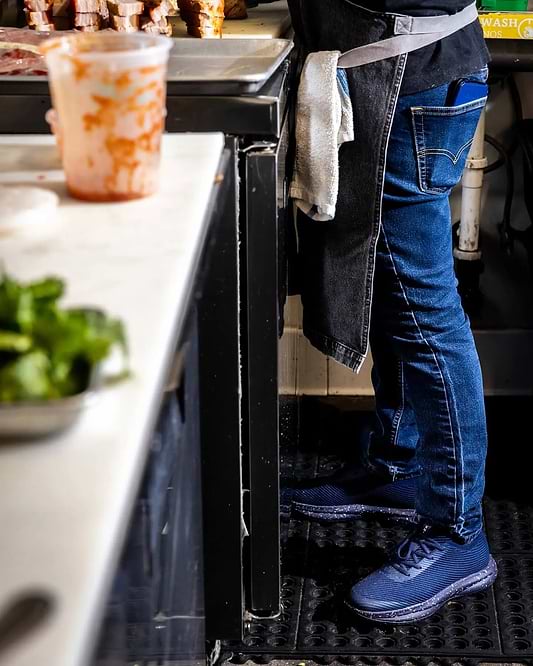
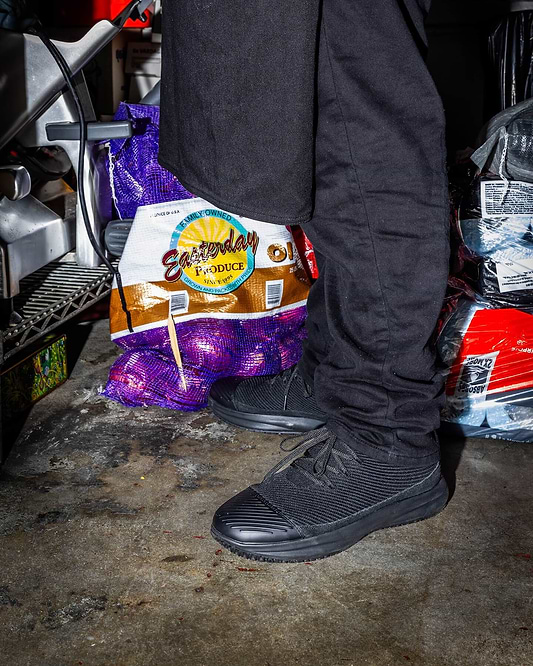
This matters most in work environments like kitchens, hospitals, and other spaces where floors may be smooth, wet, greasy, or repeatedly cleaned. Workers in those settings need more than a shoe that feels grippy in hand — they need evidence that the brand treats traction as a real performance feature rather than a marketing checkbox.
Does SR-rated mean slip-proof?
No. It means slip resistance has been evaluated, not that slipping is impossible. ASTM's own language makes that clear by noting that controlled laboratory testing should not be treated as establishing performance levels for every situation an individual may encounter.
Real-world traction still depends on the floor surface, type of contaminant, pace of movement, tread wear, and overall shoe design. Buyers should treat SR-rated language as a meaningful signal — not as an absolute guarantee.
How should buyers use SR-rated information when shopping?
Use it as a strong filter, but not the only one. A good work shoe also needs long-shift comfort, support, durability, and practical cleanability. The best shoe for a nurse or chef is not just the shoe with the right traction language. It is the shoe that performs as a full-shift tool across all the conditions of that job.
Think in layers: Does the shoe make credible traction claims? Is it built for the actual work environment? Will it still feel supportive and practical several hours into the shift? Those three questions together are more useful than fixating on any single technical term.
What is the difference between non-slip, slip-resistant, and SR-rated?
In practice, non-slip and slip-resistant are often used loosely in marketing. SR-rated implies a more standards-oriented framing, because it connects the footwear to recognized testing or specification language rather than generic traction messaging. That does not automatically make one shoe better than another, but it does make the language more meaningful and easier to evaluate.
How does Snibbs approach slip resistance?
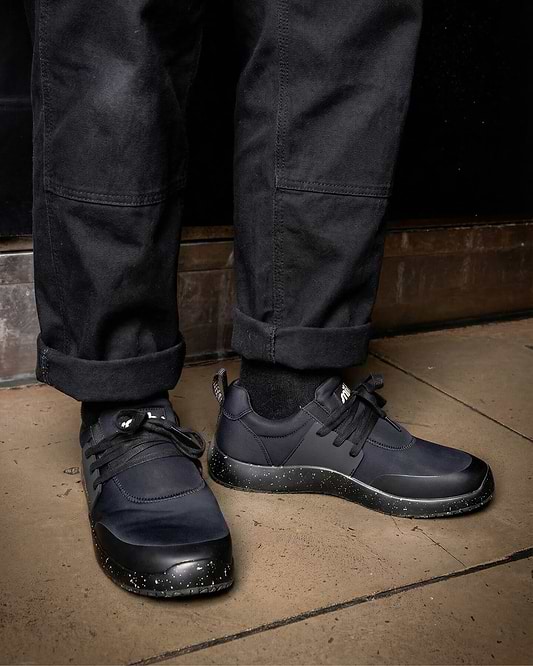
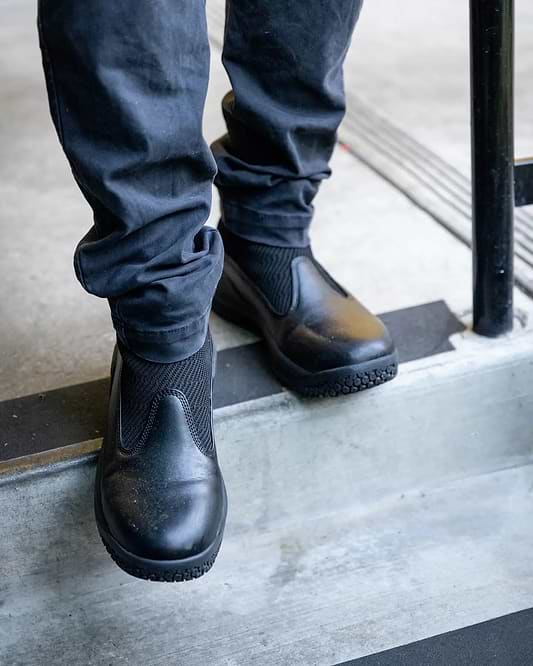
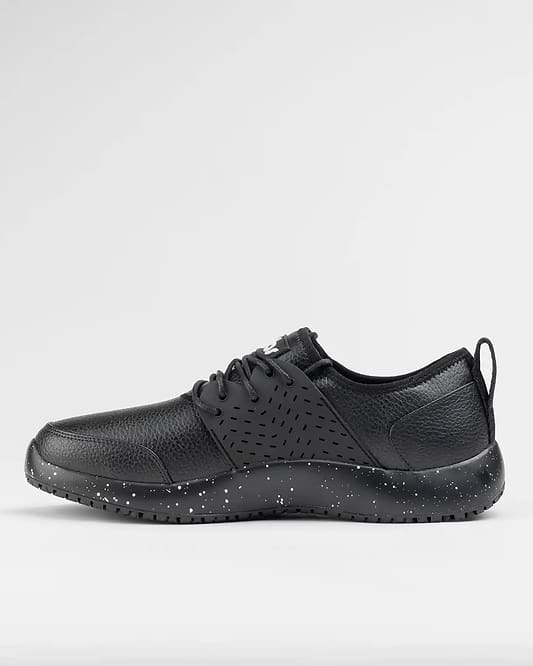
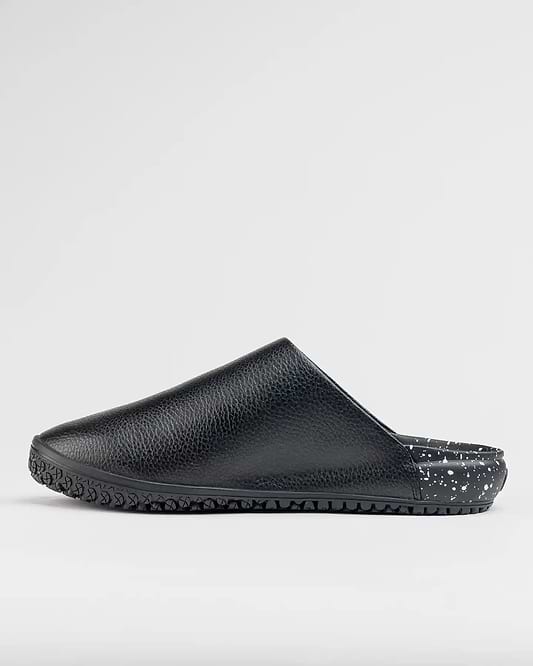
Snibbs positions its footwear around work-focused traction, all-day comfort, and industry-specific use cases. On Spacecloud, the brand pairs certified non-slip language with a spill- and water-resistant upper and all-day comfort messaging. On Spacecloud Premium, Snibbs combines similar standing-friendly positioning with an easy-to-clean vegan leather upper. On Pro, the brand emphasizes non-slip durability plus protection against spills, heat, and uneven terrain.
That kind of role-specific positioning connects traction claims directly to what workers actually do all day — which is more useful than discussing grip in the abstract.
Final takeaway
SR-rated footwear matters because it signals that traction is being discussed in a more rigorous way. ASTM F2913 is the test method for measuring coefficient of friction using a whole-shoe tester, while ASTM F3445 sets minimum slip-resistance requirements using that method. Together, they give shoppers a better framework for understanding which work shoes are making more meaningful traction claims — and which are relying mainly on marketing language.
FAQ
What does SR-rated mean?
It means footwear has been evaluated for slip resistance using a recognized standard or performance specification, rather than relying only on general marketing terms like "non-slip" or "grippy."
Is ASTM F2913 the same as ASTM F3445?
No. ASTM F2913 is the test method used to measure coefficient of friction. ASTM F3445 is the specification that covers minimum slip-resistance requirements when using that testing method.
What does COF mean?
COF means coefficient of friction — the measurement used in ASTM F2913 to evaluate slip performance under reproducible laboratory conditions.
Does SR-rated mean a shoe is slip-proof?
No. SR-rated means slip resistance has been evaluated under a recognized standard. It does not mean slipping is impossible. Real-world traction still depends on floor type, contaminants, tread wear, and movement patterns.